Cart
Cart 
 Cart
Cart
Popular Packages
Blood Tests
Package Categories
“Don’t eat anything before the test.”
Sounds simple enough.
Until you wake up hungry, automatically reach for tea, or suddenly realize how impossible it feels to avoid snacks for an entire morning. For many people, fasting before a blood test feels unnecessary — maybe even a little exaggerated.
After all, how much difference can one biscuit or a quick cup of coffee really make? More than most people think.
The truth is, food begins affecting the body almost immediately. Sugar levels shift. Fat particles enter the bloodstream. Hormones respond. Even something small, like milk in your tea, can quietly interfere with certain test results.
And once that happens, the reports may stop reflecting what’s actually going on inside your body.
So, What Does “Fasting” Actually Mean?
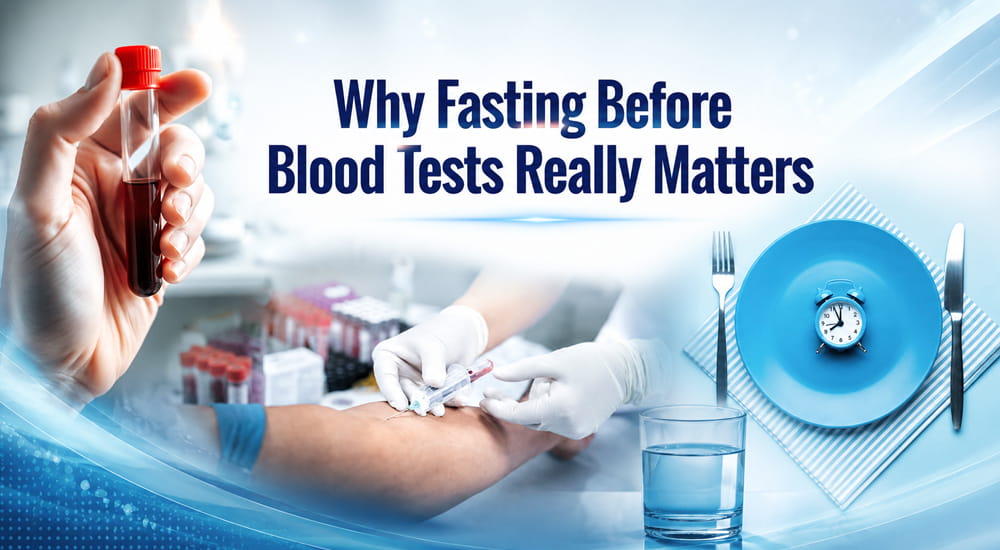
In most cases, fasting means avoiding food and calorie-containing drinks for about 8 to 12 hours before the test.
Water, thankfully, is usually allowed. In fact, doctors often recommend drinking it. Everything else? Better avoided.
No midnight snacking. No sugary tea. No “just one sip” of juice before leaving the house. The idea is to let the body settle into its natural resting state so the test results stay accurate and unaffected by recent meals.
Why Eating Before a Test Changes the Results
The body reacts to food constantly.
Eat carbohydrates, and blood sugar rises. Consuming fatty foods may temporarily increase triglyceride or cholesterol levels. Certain vitamins, minerals, and liver markers can fluctuate too.
That’s why timing matters. If someone eats shortly before testing, the results can appear misleadingly high — or occasionally even normal when they shouldn’t be. Doctors may struggle to get a clear picture, which sometimes leads to confusion, repeated testing, or unnecessary worry.
Which Tests Usually Require Fasting?
Not every blood test comes with fasting instructions. Still, some of the most common ones do, including:
Because every test works differently, following the doctor’s instructions carefully becomes important. Guessing rarely ends well in medical situations.
Can You Drink Water While Fasting?
Usually, yes. Actually, drinking water before a blood test can make the process easier because hydrated veins are often easier to locate during blood collection.
What should still be avoided, though, are flavored drinks, alcohol, milk, coffee, or anything containing calories.
Even chewing gum can occasionally affect fasting conditions. Tiny things matter more than people realize.
What If You Accidentally Eat Something?
It happens all the time.
Someone forgets and drinks tea automatically. Someone grabs a biscuit out of habit. Someone remembers the fasting rule halfway through breakfast.
The best thing to do? Simply tell the healthcare provider honestly. Sometimes the test can still continue. Other times, rescheduling may be necessary to avoid unreliable results. Either way, honesty helps far more than pretending nothing happened.
Final Thoughts
Fasting before a blood test is not some outdated hospital tradition designed to make mornings miserable. It exists for accuracy.
A few hours without food allows doctors to see a clearer, more reliable picture of your health without temporary changes caused by recent meals. It may feel like a small preparation step, but it can make a surprisingly big difference in diagnosis and treatment decisions.